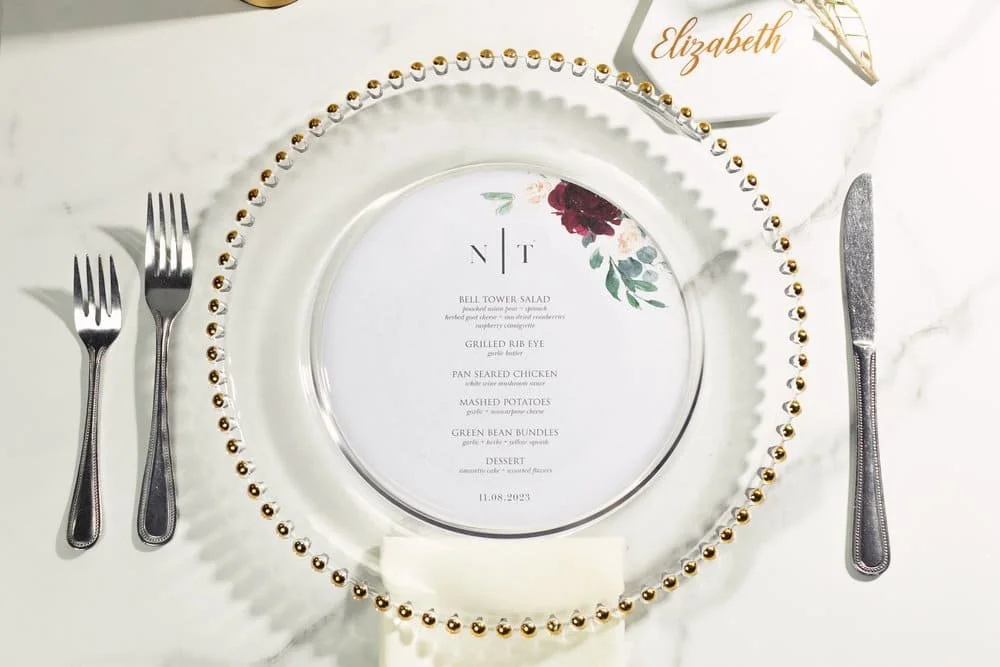
One of the decisions you’ll be making as you plan your wedding reception is how guests will find their way to their seats.
Most couples go with one of several options: seating charts, place cards, or escort cards.
Here, we’re taking a closer look at place cards, what they are, and some of the benefits of using them.
Place Card Basics
Place cards are considered wedding stationery, like invitations, save-the-date cards, and thank-you cards.
Each card displays a guest’s full name and is meant to be displayed at that person’s place setting.
Cards can be flat, much like a business card, or tented, meaning it’s folded in half and can stand alone. You can lay cards flat on place settings, lean them on something, or display them in a place card holder. It all depends on the look you want.
And, like other forms of wedding stationery, you can be as simple or ornate as you like with your place cards.
Weave in Some Personality
With a little creativity, place cards can be functional while also providing some decorative flair to reception tables.
Take inspiration from the wedding theme, setting, colors, or couple's personalities to make place cards that wow.
-Use photos - Print a small photo of each guest on their place card. It's a cute personalized touch. Or print photos of the bride and groom on each one.
-Make them 3D - Fold cardstock into creative shapes like hearts, houses, flowers etc. and print the table number and name on each one. It adds some whimsy.
-Theme them - Match place cards to your wedding theme or colors. -Try rustic wood slice cards for a barn wedding, seashells for a beach theme, or superhero logos for a fun comic book wedding. The possibilities are endless.
-Use food - If it's edible, you can print names on it! Consider thin slices of fruit, cookies, chocolates, macarons, or mini meringues.
-Double as favors - Attach small gifts or favors like a lottery ticket, small bottle of liquor, candle, photo booth prop, or a donation to charity in their name.
What About Escort Cards?
Escort cards are a less formal version of place cards. They guide guests, too, but only to their tables. From there, guests can select their own seats.
If you have place cards, you’ll display one name on each card. With escort cards, you can display one name and a table number, or you can create larger cards with a list of names assigned to each table.
Place cards are displayed on place settings. Escort cards are displayed somewhere easy to spot, usually by the entrance to the reception area.
There is no “right” choice when it comes to place cards vs. escort cards, it’s a matter of your taste and preference.
Benefits of Place Cards
Place cards are not a must. For that matter, you don’t have to go with table or seating assignments, either, depending on the formality of your wedding and your planned approach to your meal.
But in many cases, assigned seats and place cards will make life easier for your guests.
Here are a few benefits of using place cards (and by association, having assigned seats):
-Place cards prevent confusion; they help people quickly and easily find their seats.
-They can be used with seating charts or escort cards, which helps guests find their tables more quickly.
-You free guests from potentially awkward moments related to selecting a seat.
-And, you free guests from even more awkward moments of forgetting someone’s name.
-You avoid empty seats.
-If you’re serving plated meals, your catering staff will rely on place cards to ensure the right dishes go to the right people. This is particularly important if anyone has made special requests or a guest has food allergies.
-Place cards can add to the visual appeal of your place settings.
-Your place cards can reflect your event theme and personality. They can add a sense of fun to your décor or enhance your wedding’s sense of formality and elegance.
The Bell Tower on 34th is an elegant wedding venue in the Greater Houston area, near The Woodlands, TX. Our Instagrammable venue, with customizable packages, is suitable for big weddings and for small weddings.
Learn more about holding a wedding here.
Place Cards: Etiquette and Practical Answers
The questions couples actually ask about place cards, answered plainly.
Escort cards versus place cards: an escort card tells a guest which table to find, a place card tells them which seat at that table. Formal weddings and multi course dinners warrant both; buffet receptions can skip place cards entirely and let tables self organize. Cards go alphabetically by guest first name, not by table, because guests hunt for their own name, not their table number.
Handwriting matters more than calligraphy: legible beats fancy, and one person writing all of them keeps the style consistent. Phrase married couples as both names on one card, children over about twelve get their own card, and use the name the guest actually goes by, which you can confirm on the RSVP. If the timeline slips, table numbers only with a seating chart poster at the entrance is the accepted fallback, and nobody at the party will know it was plan B.
Timing and logistics finish the job. Finalize the chart after your RSVP deadline, about six to eight weeks out, and expect two or three moves before the seats are right: families with tension, coworkers who know nobody, and the uncle who must not sit near the ex all get worked out on paper, not on the day. Print the cards a week ahead, sort them alphabetically at the venue the morning of, and assign one reliable person to arrange them; last minute shuffling is the job you hand off, not the job you keep.
If the budget allows, a hand lettered card per guest doubles as the favor, many guests tuck the calligraphy into a scrapbook. And whatever format you choose, escort cards or a chart, walk the room during cocktail hour and check the flow; if two seats went unused because a couple traded places, nobody at the party will ever know.
Materials and styling round out the plan. Classic options include folded tent cards in cream stock, flat cards laid in a frame or on a bed of moss at the entrance, or place cards attached to a favor at each setting, which kills two birds with one card. Letterpress and calligraphy elevate the whole entrance table, but a clean print in a nice font at home is entirely respectable; legibility beats provenance.
One special case comes up every season: large families with same surnames. Alphabetize by first name, group couples on adjacent cards, and consider listing table numbers on the RSVP website too, because a third of your guests will check their phones at the door no matter what paper says. The physical card remains the anchor; the digital copy is the courtesy.